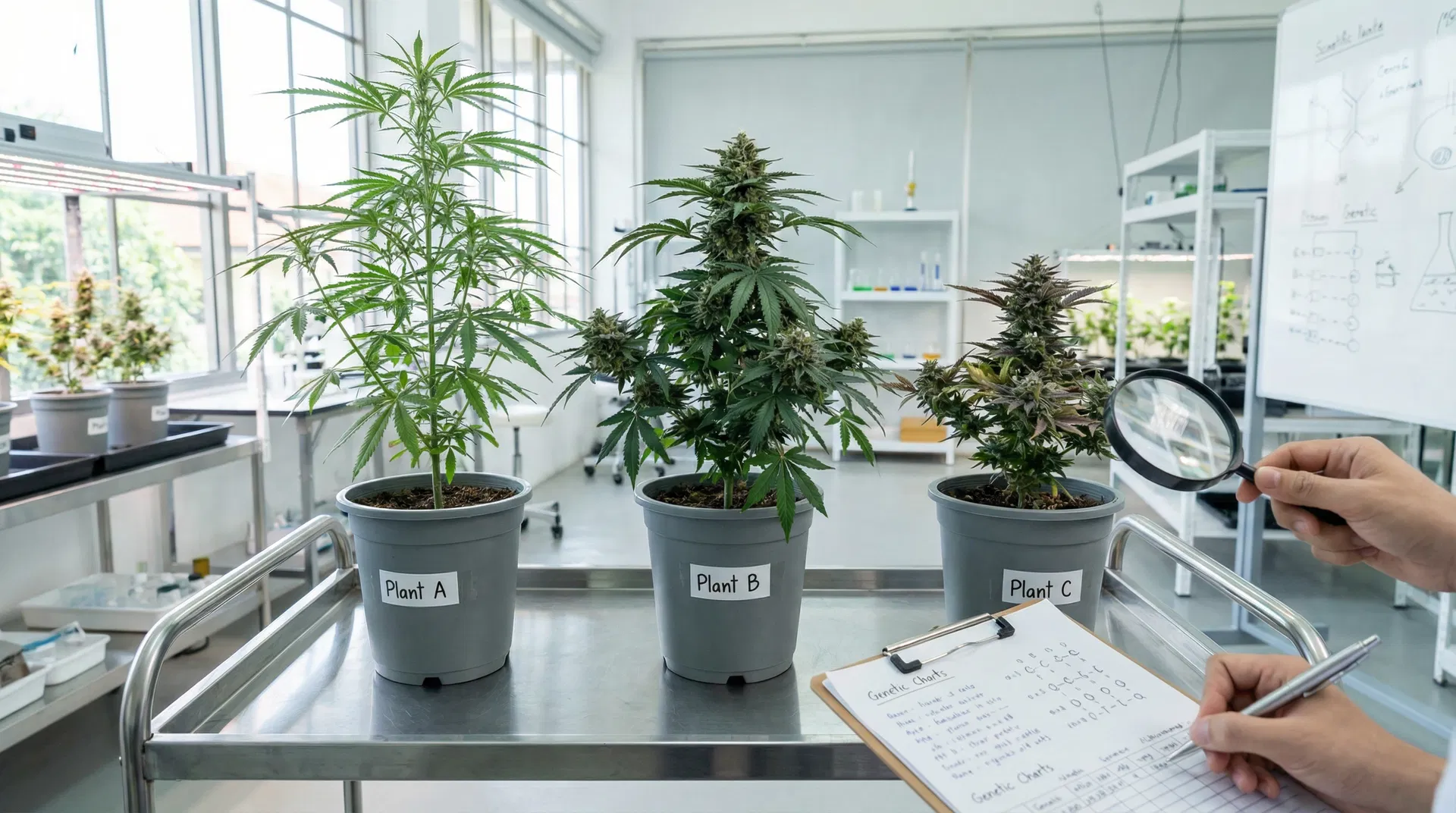
Cannabis Breeding Basics: Understanding Genetics and Selection
A comprehensive introduction to cannabis breeding principles, from basic Mendelian genetics to advanced selection strategies for professional breeders.
Introduction to Cannabis Genetics
Cannabis breeding combines art and science, requiring understanding of genetics, plant biology, and cultivation techniques. Whether you're preserving rare phenotypes or creating new varieties, solid genetic knowledge is essential.
Basic Genetic Principles
Chromosomes and Genes
Cannabis has 10 pairs of chromosomes (2n=20), with one pair determining sex (XX for females, XY for males). Thousands of genes control traits from cannabinoid production to plant structure.
Dominant and Recessive Traits
Some traits are dominant (expressed when one copy is present) while others are recessive (requiring two copies). Understanding dominance patterns helps predict offspring characteristics.
Genotype vs Phenotype
Genotype is the genetic makeup, while phenotype is the observable expression. Environment influences phenotype, so the same genotype can produce different phenotypes under different conditions.
Breeding Methods
Regular Breeding (Male × Female)
Traditional breeding crosses male and female plants, producing seeds with genetic contribution from both parents. This creates genetic diversity but also produces male plants.
Feminized Breeding (Female × Reversed Female)
Using STS to reverse a female plant produces pollen that creates 100% female seeds when crossed with another female. This is essential for commercial seed production.
Backcrossing
Crossing offspring back to a parent stabilizes desired traits. Multiple backcross generations (BX1, BX2, BX3) progressively increase genetic similarity to the target parent.
Inbreeding and Stabilization
Crossing related plants (siblings or parent-offspring) creates more uniform offspring but can reveal recessive defects. F1 hybrids show hybrid vigor; subsequent generations (F2, F3) require selection to maintain quality.
Selection Strategies
Phenotype Selection
Choose breeding stock based on observable traits:
- Cannabinoid and terpene profiles
- Yield and flower structure
- Growth characteristics and vigor
- Disease and pest resistance
- Flowering time and environmental adaptability
Genotype Selection
Advanced breeders use genetic testing to identify plants carrying desired genes, even if not expressed. This accelerates breeding by selecting based on genetic potential rather than just appearance.
Breeding Goals
Successful breeding programs have clear objectives:
- Preservation: Maintaining rare or heirloom genetics
- Stabilization: Creating uniform, predictable varieties
- Improvement: Enhancing specific traits (potency, yield, flavor)
- Innovation: Combining traits from different varieties
Record Keeping
Professional breeders maintain detailed records:
- Parent plant characteristics and lineage
- Cross dates and methods
- Offspring population size and selection criteria
- Environmental conditions during selection
- Test results (cannabinoid profiles, terpene analysis)
Common Breeding Mistakes
- Insufficient population sizes (need 50+ plants for meaningful selection)
- Selection based on single plants rather than populations
- Ignoring recessive traits that emerge in later generations
- Failing to test males (they contribute 50% of genetics)
- Environmental inconsistency during selection
Tools for Modern Breeders
Professional breeding requires specialized products:
- STS Solutions: For feminized seed production
- Rooting Hormones: To preserve selected phenotypes as clones
- Growth Regulators: To maintain mother plants and manage breeding populations
- Stress Resistance Formulas: To evaluate plant resilience under pressure
Conclusion
Cannabis breeding is a rewarding pursuit that combines scientific knowledge with horticultural skill. Whether preserving heirloom genetics or developing new varieties, understanding genetic principles and using professional-grade tools ensures success. Mary J Apothecary provides the specialized formulations that serious breeders depend on to achieve their genetic goals.